
Artificial intelligence is rapidly transforming how companies recruit and select talent. From automated resume screening and AI-powered interviews to predictive hiring tools, employers are increasingly relying on technology to make faster and data-driven hiring decisions. However, this shift has also raised serious concerns about fairness, transparency, and accountability in the recruitment process.
To address these risks, governments and regulators are introducing new employment law regulations governing AI in hiring. These laws aim to ensure that technology improves efficiency without undermining employee rights, workplace equality, or data privacy.
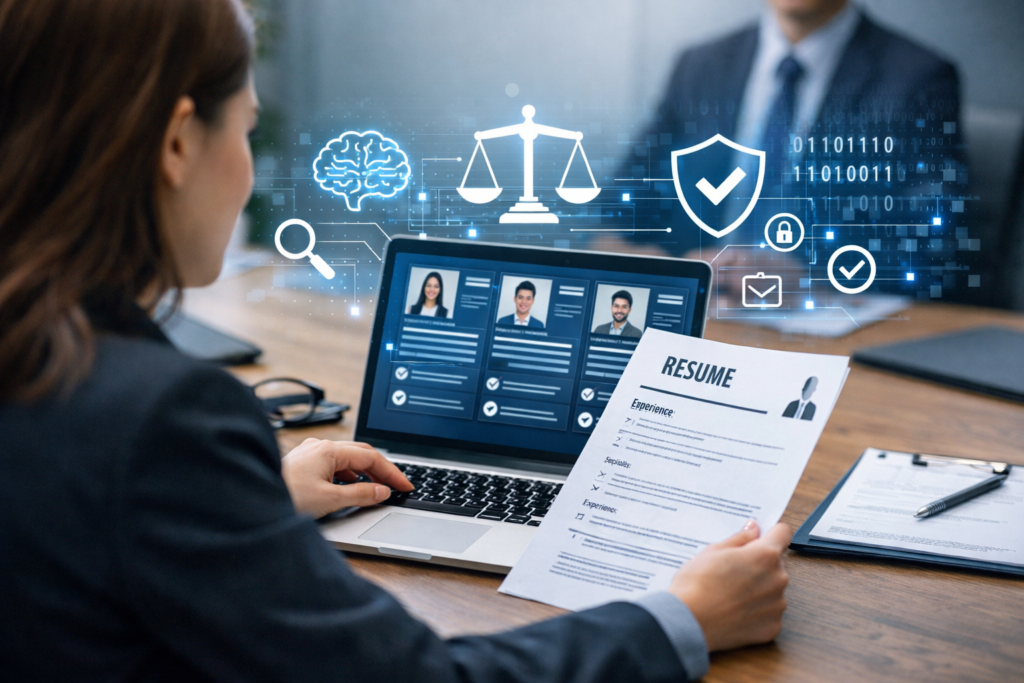
Below are the key legal trends shaping the use of AI in modern recruitment.
Regulation of Automated Hiring Decisions
- Employers are increasingly restricted from relying solely on automated systems.
- Many laws require human involvement in final hiring decisions.
- Fully automated rejection of candidates is being discouraged or limited.
Why it matters:
Human oversight helps prevent unfair or inaccurate decisions made purely by algorithms.
Preventing Bias and Discrimination in AI Hiring
- AI tools can unintentionally replicate past hiring biases.
- Employment discrimination laws now apply to:
- Algorithm-based screening
- AI ranking systems
- Automated assessments
- Employers remain legally responsible for biased outcomes.
Why it matters:
Using AI does not protect companies from discrimination claims—it increases their responsibility.
Transparency in Recruitment Technology
- New regulations require employers to disclose when AI is used in hiring.
- Candidates may have the right to know:
- How their data is evaluated
- Whether AI influenced hiring decisions
- Black-box decision-making is increasingly restricted.
Why it matters:
Transparency builds trust and allows candidates to challenge unfair outcomes.
Candidate Consent and Notification Requirements
- Job applicants may need to be informed before AI tools assess them.
- Some laws require:
- Explicit consent
- Clear explanations of AI use
- AI-based video and facial analysis tools face stricter scrutiny.
Why it matters:
Candidates deserve control over how their personal data is used.
Data Protection and Privacy Compliance
- AI hiring systems process large volumes of personal information.
- Employers must comply with:
- Data minimisation rules
- Secure storage requirements
- Limited data retention periods
Why it matters:
Improper data handling can lead to legal penalties and reputational damage.
Restrictions on High-Risk AI Practices
- Certain AI practices are being limited or banned, such as:
- Emotion recognition
- Facial expression analysis
- Personality prediction based on voice or appearance
- These tools lack scientific reliability.
Why it matters:
Employment decisions should be based on skills—not unproven behavioural assumptions.
Accountability Shifts to Employers
- Employers cannot shift legal responsibility to AI vendors.
- Companies are expected to:
- Audit AI tools regularly
- Monitor outcomes for bias
- Maintain documentation
Why it matters:
Using AI increases legal accountability, not reduces it.
Real-World Example:
A company uses AI software to filter job applications based on past hiring data. Over time, the system automatically rejects candidates from certain age groups. Under new employment law regulations, the employer can be held legally responsible for age discrimination—even if the bias came from the algorithm.
What This Means for Job Seekers
- Greater protection against automated discrimination
- Increased transparency in hiring processes
- More opportunities for human review
- Stronger data privacy rights
What This Means for Employers
- AI tools must be carefully selected and monitored
- Compliance must be ongoing
- Human oversight is essential
- Documentation is critical for legal defence
How AI Hiring Laws Work in Real Life
AI in hiring may sound complex, but the problems it creates are actually very real and very human. That is why new employment laws focus less on technology and more on how AI decisions affect people.
Case 1: Resume Screening Gone Wrong
A mid-sized company uses AI software to shortlist resumes for an entry-level role. The system is trained on past employee data, where most successful hires were young graduates. Over time, the AI starts rejecting resumes from older candidates—even when they meet all the job requirements.
No one at the company notices this pattern at first.
Under new employment law regulations, this becomes a legal issue. Even though the discrimination was unintentional, the employer can still be held responsible. The law makes it clear: using AI does not remove accountability.
Case 2: Automated Rejection Without Explanation
A job seeker applies for multiple roles and receives instant rejection emails—sometimes within minutes. There is no interview, no feedback, and no explanation. The decisions were made entirely by an automated system.
New workplace law updates are changing this. In many regions, candidates now have the right to know when AI is used and may request basic explanations for hiring decisions. Employers can no longer hide behind “the system decided.”
Case 3: AI Video Interviews and Privacy Risks
Some companies use AI-powered video interviews that analyse facial expressions, voice tone, or eye movement. Candidates are scored on “confidence” or “personality fit.”
However, regulators have raised concerns that these tools are unreliable and unfair—especially to people with disabilities, anxiety, or different cultural communication styles. As a result, several employment laws now restrict or closely monitor the use of such tools.
Employers may need explicit consent before using them—or avoid them altogether.
Case 4 : Who Is Legally Responsible?
A company argues that any bias came from a third-party AI vendor. Employment law does not accept this excuse. The responsibility stays with the employer who chose to use the tool.
- This is why new regulations encourage:
- Regular AI audits
- Human review of decisions
- Clear documentation
FAQs
Is AI hiring legal?
Yes, but it must comply with employment discrimination and data protection laws.
Are employers responsible for AI tools?
Yes. Legal responsibility remains with the employer, not the software vendor.
Final Thought
AI is reshaping recruitment, but employment law is ensuring that technology serves fairness—not convenience alone. As regulations evolve, organisations that adopt transparent, ethical, and compliant AI hiring practices will be better positioned to build trust, reduce legal risk, and attract top talent. Clear policies, regular audits, and ongoing training will become essential parts of responsible recruitment. Companies that invest early in ethical AI practices are likely to gain a competitive advantage, while those that ignore legal and ethical expectations may face reputational damage, legal penalties, and loss of candidate trust in an increasingly regulated hiring landscape.
If you liked this blog please do read our other blogs :SSC CHSL 2025 results out? || Exclusive: China Approves First Batch of Nvidia H200 AI Chips
Pingback: Job & Internship Openings Till February 2026 (Apply Now) - ForgeNative